Uniqueness
03. November 2009 | 14:26
By now we have partially harvested all our grape varieties: Grüner Veltliner, Riesling, Pinot Gris, or red varietals apart from Cabernet Franc and a particularly wonderful Chardonnay: their healthy grapes show a generous sugar content of 20° KMW, the dried berries which have been separated out even 38° KMW! This is a very good news.
My personal favourites among the sweet wines, by the way, are not all that extreme, usually just under 30° KMW. Beyond 40° KMW the wine begins to be treacly and thick. I prefer the easy drinking elegance of a Beerenauslese.
A slow harvest has the advantage that one can bring in some of every varietal in order to assure the future of the winery. Now it becomes possible to take some risks with the remaining grapes, to see what fate has in store.
The remaining grapes will be exposed to the autumn winds and the first cold nights and will met you are into wines with deeply expressive personalities.
Now we're looking forward to the first frosts and two of the falling leaves, which will contribute to their character of these wines. During their rainy days our harvesters occupy themselves by building beautiful stone walls, cleaning the barrels in the cellars and are waiting until the grapes are dried off again. During the sunny intervals they can harvest the most beautiful wines.
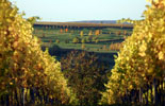
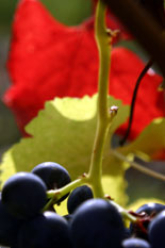
Now our vineyards show the most beautiful colours: all shades of green, yellow and red. Every berry tastes absolutely unique. Just as every human fingerprint is unique every berry has its own taste profile and at the wine made from it will be something that has never existed and will never exist again.
In the final analysis a wine is the history of its vineyard.